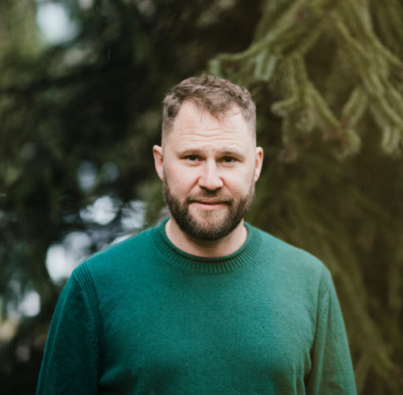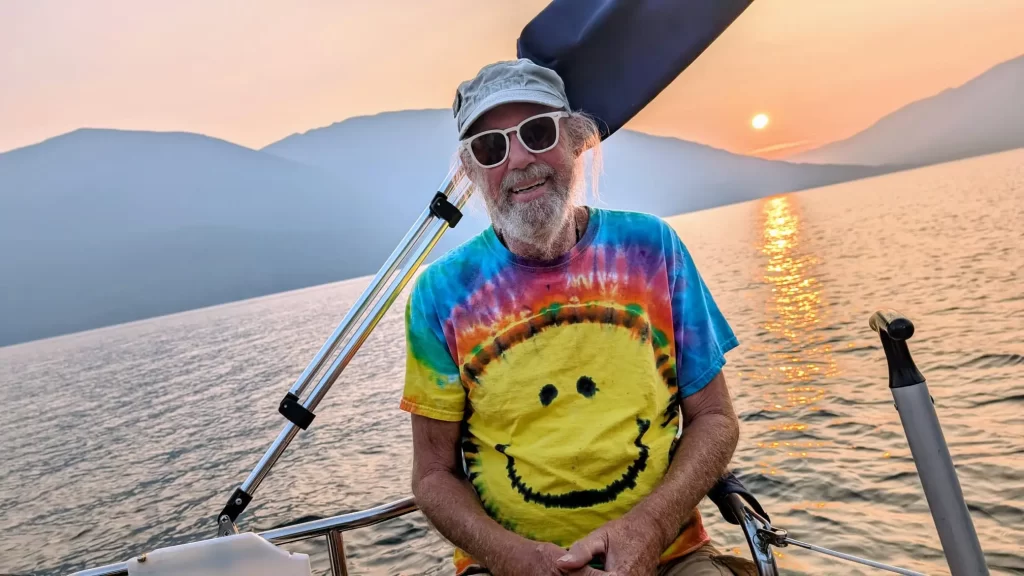
Photo of Qi Integrated Health founder Kiem Schutter’s father, a significant influence on Kiem’s journey.
How psychedelic-assisted therapy helps people reconnect with hope
Returning to the Clinic After Losing My Dad
About a month after my dad passed away, I got a call from one of our psychedelic therapists. She had forgotten her key to the clinic and needed someone to come let her in before the day’s psychedelic-assisted therapy sessions began.
I told her I was happy to stop by and let her in. I had just returned to work after losing my dad, and I was looking forward to seeing our team again after receiving their kind messages of support.
So I drove in thinking maybe the reason I’d been called back to the clinic that day was simply to reconnect with people I care about.
What I didn’t realize was that I was about to hear a story that would stay with me long after that morning ended.
A Psychedelic Therapy Program Participant’s Story
When I arrived, one of the participants for the day’s psychedelic therapy program was already there early. We introduced ourselves, and I told him I was the founder of Qi Integrated Health and PsyQi, the psychedelic branch of the clinic. He smiled and started telling me about his morning commute into Vancouver.
Normally, he said, taking the train into the city would have irritated him. The noise, the crowds, the delays… all of it would usually leave him tense and frustrated before the day had even started. But that morning, he had been practicing some of the breathing and grounding techniques he learned through our psychedelic integration therapy program, and instead of getting caught in his usual stress response, he found himself calm and surprisingly at ease.
That moment stayed with me because it showed something important: healing often begins before people even realize it has started.
Living With Stress, Trauma, and Emotional Exhaustion
We sat down together and kept talking. He shared that before finding our psychedelic-assisted therapy program, he had been struggling deeply after years of carrying stress, pressure, grief, and emotional exhaustion without ever really dealing with it.
As we talked more, he explained that throughout his career, several people close to him had struggled with their mental health. Then he told me that a year and a half earlier, one of his close friends had taken his own life.
Only after sharing all of that did he tell me they were firefighters.
So many first responders spend their lives helping others while learning how to suppress what they themselves are carrying. Part of the job is pushing through chronic stress, trauma, grief, and emotional pain, and they become incredibly good at functioning while overwhelmed.
For many people, by the time they finally ask for help, they’ve already spent years feeling disconnected from themselves, their relationships, and their lives.

How Psychedelic-Assisted Therapy Helps People Reconnect With Hope
He looked at me and said that if it wasn’t for this program, he probably wouldn’t still be here.
Then he told me something I haven’t been able to stop thinking about since. He said he believed his children might have grown up without their father.
There I was, one month after losing my own dad, listening to another father talk about almost leaving his young children behind. Children who may not have gotten the opportunity to grow up with their father the way I was able to.
Moments like that remind me why conversations around mental health support, trauma recovery, and psychedelic-assisted therapy matter so deeply.
Reconnecting With Life After Depression and Burnout
When people search for alternatives to traditional mental health treatments, many are not looking for a miracle cure. They’re simply looking for hope. They want to feel connected to life again.
At PsyQi, we often work with people experiencing:
- depression and burnout
- chronic stress and anxiety
- emotional numbness
- unresolved grief and trauma
- or a deep sense of disconnection from themselves and others.
Some are first responders. Some are parents, healthcare workers, entrepreneurs, or business owners. Many appear completely fine on the outside while quietly struggling internally.
One of the most powerful things I’ve witnessed through psychedelic-assisted therapy is people rediscovering the desire to fully participate in their lives again.
What Psychedelic-Assisted Therapy Actually Looks Like
When people hear the words “psychedelic therapy,” they often assume the focus is entirely on the substance itself.
But the molecule is only one part of the process.
What makes the real difference is the combination of safety, preparation, therapeutic support, and integration.
Why Integration Therapy Matters
At PsyQi, psychedelic integration therapy is a foundational part of our approach.
Preparation sessions help people build emotional safety and intention before medicine sessions begin. Integration sessions help people process what came up afterward and apply those insights to their daily lives in meaningful ways.
That participant noticed this shift before his session had even started. On the train ride into Vancouver, instead of reacting automatically to stress, he used the grounding tools he had learned and experienced something different.
For the first time in a long time, he felt calm in his own mind.That’s what many people misunderstand about psychedelic-assisted therapy programs. The healing isn’t only about what happens during a medicine experience. Often, it’s about helping people develop a new relationship with themselves, their emotions, and their nervous system

Psychedelic-Assisted Therapy Is Not a Miracle Cure
I’m not sharing this story because I think psychedelic-assisted therapy is a miracle cure.
It’s not.
Healing requires continued work outside of medicine sessions themselves. It often involves therapy, nervous system regulation, lifestyle changes, emotional processing, and ongoing support.
But I have personally witnessed people reconnect with hope after believing they were out of options.
I’ve seen people:
- repair relationships
- reconnect with their children
- rediscover meaning
- feel emotionally present again
- and genuinely want to live fully
For many people exploring psychedelic-assisted therapy for depression and burnout, that reconnection with hope becomes the beginning of real change.
Exploring Psychedelic-Assisted Therapy in Vancouver BC
One of the hardest parts of mental health struggles is how isolating they can feel.
Many people silently wonder whether things can ever feel different.
The truth is, support exists.
If you’re curious about psychedelic-assisted therapy and want to learn more about how our programs work at PsyQi, you can book a discovery call with our team. There’s no pressure and no expectation, just an opportunity to ask questions, learn more about our psychedelic therapy programs in Vancouver BC, and explore whether this approach feels aligned for you.
Final Thoughts
I still think about that conversation often.
One month after losing my own father, I sat across from another father who was beginning to reconnect with life again.
And maybe that’s one of the most meaningful things I’ve witnessed through this work.
Not dramatic overnight transformations. Not people becoming someone entirely different.
But people slowly reconnecting with calm, meaning, relationships, hope, and themselves again.
Sometimes healing begins in moments as simple as sitting on a train ride into Vancouver…and realizing your mind. Finally. Feels. Quiet … for the first time in years.